
Campuccino #95
The Exhausting Weight of Flags

Sou Sdei and welcome to Campuccino, your bi-monthly dispatch of key headlines in Cambodia with a dash of opinion.
To new subscribers, welcome! I’m Darathtey, a communication consultant, writer, and researcher. Learn more about my work here.
Hello from chilly Phnom Penh! I’ve been enjoying our sub-30-degree Celsius windy bliss. Here we are one month away from turning the page on this year. It’s been an unpredictable and strange year for me. I’m reaching a crossroads for my communication in the development context work amid a shifting funding landscape and find myself standing at the junction of figuring out what’s next. So, this year, I switched out my usual media conference attendance for an art meetup in Laos reconnecting with old friends and figuring out what lies ahead for me. It was good and what I needed, reuniting with familiar faces and making new connections. In the middle of a quiet Vientiane, I found myself sitting in front of a jazz bar surrounded by friends from across the region: Thailand, Indonesia, Malaysia, and Singapore. And I thought to myself: this feels like home. In that circle, we were unique individuals beyond our flags. We shared history, ancestral line, culture, arts, and a yearning for peace. In that circle, borders didn’t exist.
- Darathtey
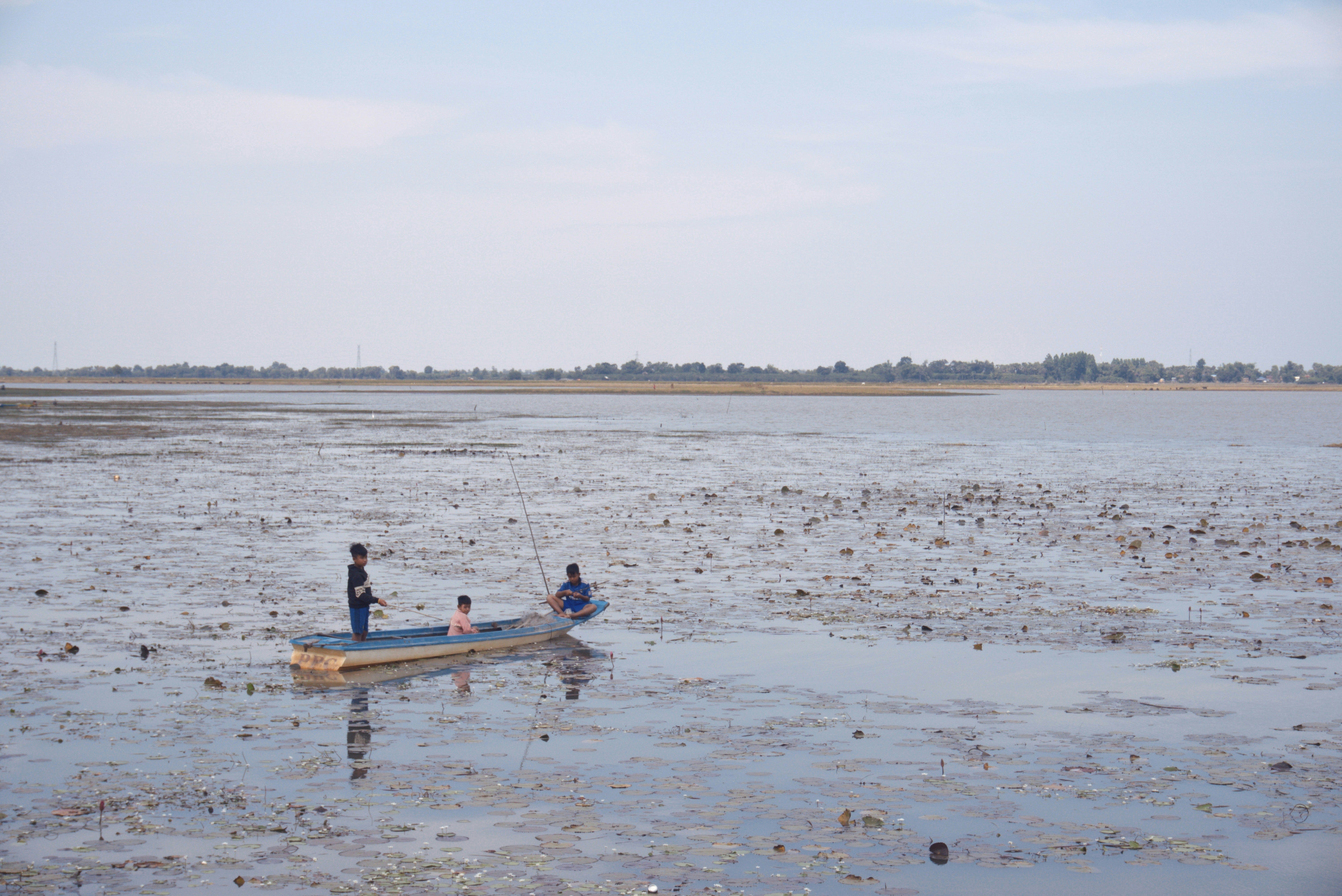
With many ugly conflicts around the world including the one at home, the topic of borders pops up in my head a lot, maybe too much that I actively try to push it away sometimes. This brings me to the current issue of Cambodia and Thailand relations in the midst of this longer-than-necessary border conflict. I don’t want to dwell on it because, frankly, it is exhausting. To catch you up in a one-breath summary, it goes like this: we signed a peace accord last month, then Thai soldiers stepped on a landmine at the border, which made them angry and led them to diminish the peace accord. Then, news emerged in Cambodia a few days later that Thai armed force shot at Cambodian civilians, followed by another report that a Cambodian immigrant workers were allegedly gang raped by Thai soldiers. (Exhale…) In the midst of all these, I once again turned to Kouprey for a more articulated reporting and analysis because I ran out of my own words to describe my sentiment on the issue.
On a lighter note, it is fascinating to observe the Cambodian sentiment on the boycotting of Thai products. What emerged as personal choice by many at the beginning of the conflict has turned into wider scale implementation by the retail businesses. It took me a while to realise why I could no longer find a few regular household products I used (they were Thailand imports). Then, I looked around and saw a sea of Cambodian flags propped up in front of many aisles at Aeon supermarket. Where there were many Thai imports before, they are now replaced with a lot of Vietnamese brands I’d never seen. As a consumer, I have no problem adapting, and I’m glad this conflict gave Cambodian businesses an opportunity to step up and put their products out there. What I find a little ironic, though, is the sea of Vietnamese products I see because I know we, Cambodians, have historically stereotyped Vietnamese products as lower-quality compared to Thai products. So, in a way, this might be that time to burst the stereotype once and for all.
A few weeks ago, the news about Chen Zi exploded after the US and UK imposed sanctions on him and his megacorporation, Prince Holding Group. This wasn’t a surprise for me because I recall seeing local media (before it was shut down and its website blocked) had previously done a deep dive on him. The recent news on Chen Zi also brought attention to the scam issue in Cambodia and other hotspot countries in the region.
I had a Vietnamese friend asking me straight to my face, in person, whether the whole scam thing was true. I said it was indeed a problem. This encounter reminded me of 2012 when I was confronted by (rightfully) an angry Filipino student, whom I met at a conference, about my government failing to issue a joint communique on the South China Sea. The power of representation, eh?
It made me wonder what my nationalist friends would have done in that situation. Would they deny, deny, deny (as taught and shown many times by you-know-who)? Or would they break out a traditional Apsara dance or a photo of Angkor Wat and scream #KhmerPride? This might be a bad joke on my part, but the visualising of that made me chuckle a little.
Visually Pleasing
Arts & Culture
🕺🏽 Welcome to Phnom Penh by Ridikal Magazine is a short documentary about hip-hop culture in Cambodia. I came across it during my endless searching for content to watch in the YouTube universe. I’m glad I found this one because it expanded my knowledge about my own city’s growing subculture. It is also refreshing to see Phnom Penh in a different light beyond S-21 and the Killing Field.
🎵 NeoRoots is an experimental album recently launched by Klapyahandz in collaboration with Cambodian Living Arts. The album is a fusion of Cambodian traditional instruments and a more contemporary hip-hop sound. I think it is a good effort and I welcome more work such as this. Do I like the album? I’m quite underwhelmed to be frank. I cannot connect with the music and find it is somewhat overproduced. Look, this is my very humble unprofessional opinion. You might like it. Have a listen to the whole album here. If you think differently about the album, hit reply and tell me why 🙂
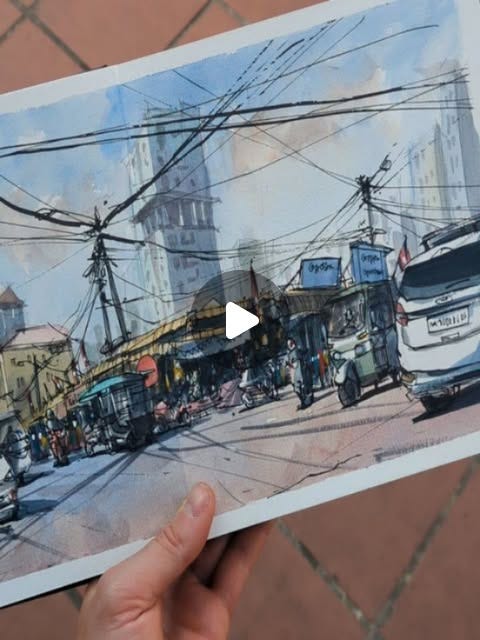
🎨 Siem Reap welcomed a new contemporary art space called SM Art Center. It was founded by two very established Cambodian artists: SVAY Sareth and YIM Malin. This is, however, not a new endeavour as the duo previously set up a similar space known as Blue Art Center. The new space looks like a rebranding and addition to their previous vision. I have yet to visit but it is on my to-go list when I’m back in SR next time. Here’s a sneak peak. It looks incredibly inviting!
⌨️ Lastly, this is for you typography nerds and graphic designers out there. The Khmer fonts family has recently welcomed a new addition of a contemporary loopless script known as Futura®100 Khmer. It is designed by type designers Sovichet Tep & José Scaglione & Veronika Burian.
Campuccino is a bi-monthly dispatch of key headlines in Cambodia, written by @DarathteyDin.
I’d love to hear from you. If you have feedback or content ideas, please write to me at hello@darathteydin.com